
In 2025, 288,579 German citizens moved abroad, the highest figure in Destatis's table, which goes back to 1954 [B8]. 191,890 came back, so Germany lost 96,689 of its own citizens on balance [B7]. The top income tax rate is 47.5% in 2026 [S1]. This page sets out what pushes Germans out, what Germany still does well, and where the people who leave end up.
Germany has lost citizens on balance every year since 2005
Destatis counts registrations and deregistrations. Among German citizens, departures were 265,035 in 2023, 269,986 in 2024 and 288,579 in 2025 [B7]. Arrivals barely moved over the same years: 191,356, 189,107 and 191,890 [B7]. So the net loss grew from 73,679 to 80,879 to 96,689 [B7].
Germans leaving Germany each year
source 11German citizens who deregistered to move abroad, Destatis; 191,890 returned in 2025.
Destatis says the net emigration of German citizens has run every year since 2005 [B8]. The 2016 figure of 281,411 departures is the only one near 2025, and Destatis flags it as only partly comparable because of register clean-ups [B8]. This is not a spike. It is a trend that has now reached a record.
The country as a whole still gains people: net migration across the border was 235,000 in 2025, down from 430,183 in 2024 and 662,964 in 2023 [B11]. The loss is among citizens, and it is the part of the picture a German household can act on.
Taxes: a 47.5% top rate and a 49.3% wedge
The top rate of income tax in Germany is 47.5% in 2026, against an average of 43.4% among European OECD countries [S1][S2]. The wedge matters more for most people. A single worker on the average wage hands over 49.3% of the employer's labour cost in income tax and social contributions, second only to Belgium's 52.5%, against an OECD average of 35.1% (2025 data) [S4]. Inheritance tax runs from 7% to 50% [S15], while Austria and Sweden levy none [S16].
Paraguay's line on our country page is a 10% flat rate, 0% on foreign income, and no wealth or inheritance tax [S17]. The full European comparison is on the taxes page.
Rent: a new tenant pays roughly double what an existing one does
The asking rents Greix measured in Q2 2026 (net cold, per m², new listings) were €23.70 in Munich [B26], €17.80 in Frankfurt [B31], €16.50 in Hamburg, up 5.1% on a year earlier [B21], €16.00 in Cologne, up 6.0% [B36], and €15.30 in Berlin, down 0.8% [B1]. Berlin was the only large German city where asking rents fell [B1].
The official rent indexes for existing contracts are far lower: €7.71 in Berlin in 2026 [B2], €9.94 in Hamburg in 2025 [B23], €15.38 in Munich in 2025 [B28]. The two series measure different things, new listings against existing contracts, but the gap is what a move costs you. Berlin's asking rent is roughly double the average existing contract [B1][B2]. At Munich's asking average, a 50 m² flat is €1,185 a month net cold; that is the per-m² figure times 50, not a listing price [B26].
Asking rent per m², Q2 2026
source 23Greix, net cold, new listings. These are asking rents, not what existing tenants pay.
If you rent in Germany, staying put is the cheap option and leaving your flat is the expensive one. That is why so many tenants stay in flats that no longer fit, and why a move abroad is compared against the new-lease price, not the old one.
Electricity is the second most expensive in the EU
Household electricity cost €0.3618 per kWh in Germany in the first half of 2026, all taxes included, against €0.2832 for the EU-27, the second highest in the EU after Ireland [B14]. Gas was €0.1156 per kWh against €0.1103 [B14]. The second half of 2025 was higher still, at €0.3869 for electricity [B14]. The detail is on the energy prices page.
Bureaucracy is getting cheaper on paper and not in practice
The National Regulatory Control Council (NKR) reported in September 2026 that the annual compliance cost of federal rules fell by about €6.8 billion between July 2025 and June 2026, to its lowest level since 2020 [B16]. Most of that came from rolling back the heating law, which the NKR says brings no directly felt relief [B16]. Over the same period the annual bureaucracy costs for business rose by about €1.3 billion, mainly because of EU sustainability reporting rules [B16]. The compliance cost level is still above 2011 [B16]. More on the bureaucracy page.
What Germany still does well
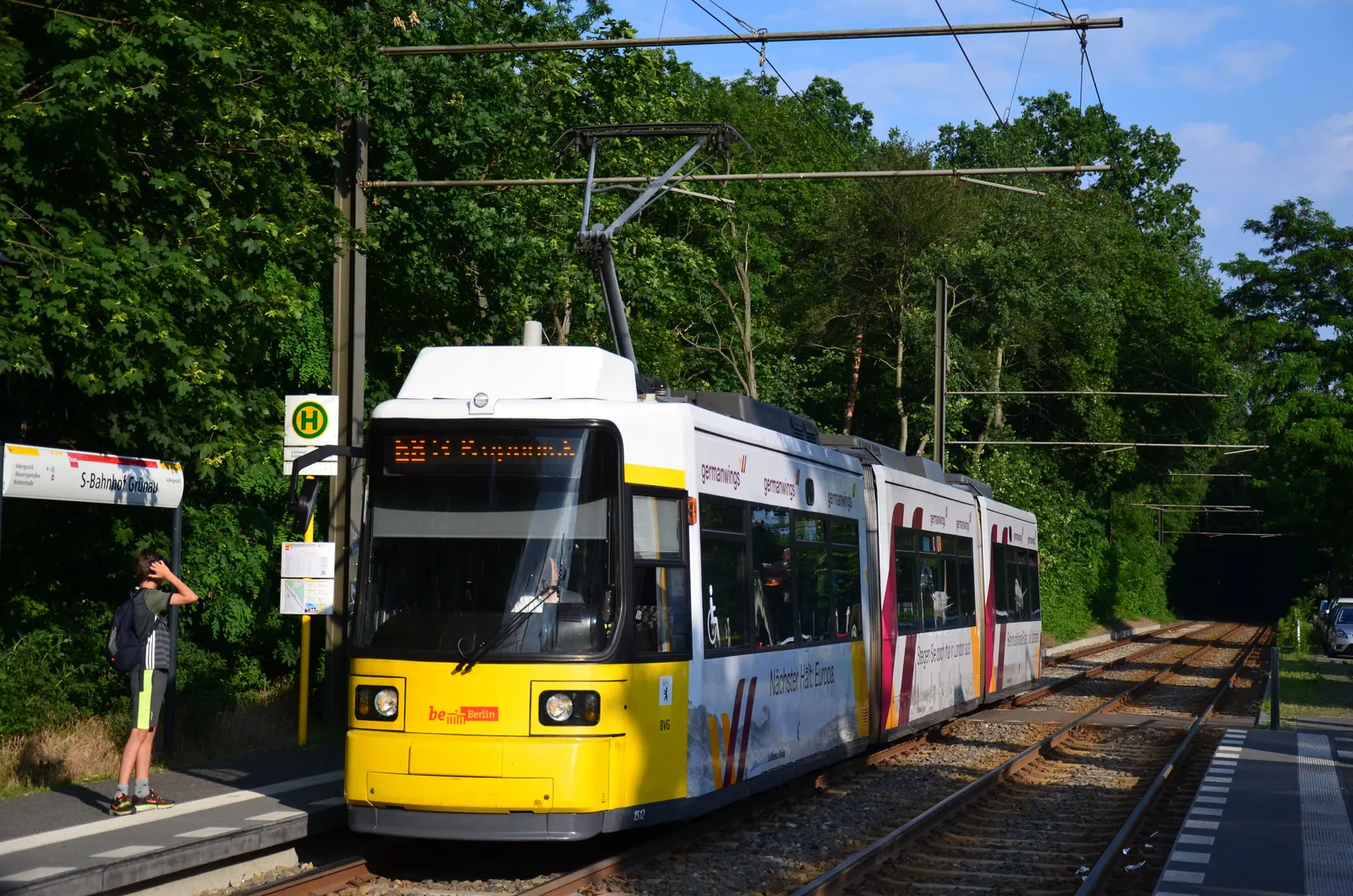
Germany still has things worth naming. The Deutschlandticket gives you local and regional transport across the country for €63 a month until 31 December 2026, and €66.80 a month from 1 January 2027 [B15]. Violent crime fell 2.3% in 2025 to 212,335 cases [B13], and the police cleared 57.9% of recorded offences [B12]. Those are recorded offences, not a victim survey, and the 2025 total cannot be compared with earlier years because of the April 2024 cannabis law [B12].

Where Germans go: Switzerland, Austria and Spain first
In 2025 the main destinations were Switzerland with 22,700, Austria with 13,500 and Spain with 9,700 [B9]. Outside Europe, the USA took just under 8,900 Germans, down 35% from just under 13,600 in 2005 [B10]. Canada took just over 1,800, down 39% from just over 3,000 [B10]. Mexico took about 800, up 43% on twenty years earlier [B10].
Where Germans went in 2025
source 13Destatis. The USA figure is 'just under 8,900' [B10].
Switzerland's top personal income tax rate is 39.7% against Germany's 47.5%, both in 2026 [S1]. Austria's is 55.0% and Spain's 54.0% [S1], so for those two the draw is language, distance or climate, not tax. The Latin American countries on this site compete on tax first.
Paraguay has a 10% flat rate and 0% on foreign income [S17]; see Paraguay. Argentina has 5–35% brackets and no wealth tax on foreign assets for new residents [S17]; see Argentina. Lufthansa flies Frankfurt to Buenos Aires nonstop in about 13 h 45 min [B4]. Buenos Aires is 4 hours behind Berlin in winter and 5 in summer, so your afternoon is their morning [B5].
Germany against Paraguay and Argentina
| Measure | Germany | Paraguay | Argentina |
|---|---|---|---|
| Top income tax rate | 47.5% (2026) [S1] | 10% flat [S17] | 5–35% brackets [S17] |
| Tax wedge, single average earner | 49.3% of labour cost (2025) [S4] | not on the sheet | not on the sheet |
| Inheritance tax | 7%–50% [S15] | none [S17] | not on the sheet |
| Household electricity, H1 2026 | €0.3618 per kWh [B14] | not on the sheet | not on the sheet |
| Flight from Frankfurt | n/a | not on the sheet | 13 h 45 min nonstop [B4] |
| Time difference from Berlin | n/a | not on the sheet | 4 h winter, 5 h summer [B5] |
Your city
Berlin: asking rents fell 0.8% in Q2 2026 to €15.30 per m², while the average existing contract pays €7.71 [B1][B2]. Read the Berlin page.
Hamburg, Munich, Frankfurt and Cologne all saw asking rents rise on the year in Q2 2026 [B21][B26][B31][B36]. If you are comparing a German city with a move abroad, the services page and the escape plan are the next step.